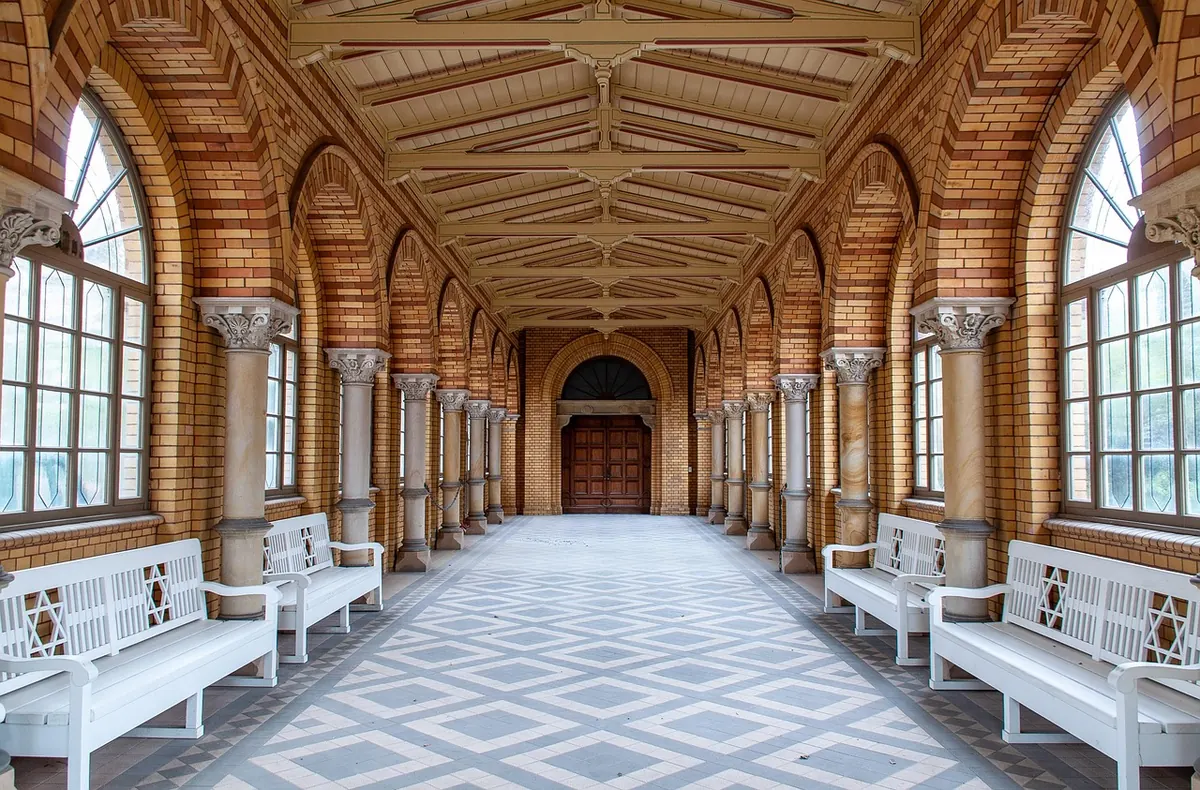
Most small homes have a wall that does nothing. It runs between a door and a radiator, or under a window, or along the side of a kitchen where nobody lingers, and it holds nothing but a colour. A bench is what that wall is waiting for. Wooden seating does three jobs at once: it seats people, it stores things, and it gives a room shape without the bulk of a sofa or a pair of dining chairs. In a flat or a cottage, where every piece of furniture has to justify the floor it stands on, that matters more than style.
What follows are seven bench ideas that work in tight rooms, along with the numbers and placements that decide whether the result feels generous or simply in the way. None of them need a joiner, though a couple are better made to measure if you are fitting an awkward alcove.
Take five measurements first
A bench is a simple thing, but the gap between one that feels built in and one that feels like an obstacle comes down to a handful of numbers. Check these before you buy or commission anything:
- Seat height: 43–45cm suits most adults. Go lower for children, higher for a perch at a kitchen counter.
- Depth: 35–40cm for comfortable sitting. Around 30cm if people will perch on it rather than settle.
- Clearance in front: at least 45cm of floor so knees and toes have somewhere to go. In a narrow corridor that may mean a bench no deeper than 30cm.
- Obstacles: door swings, radiator positions and the direction your windows open. A bench in front of a radiator blocks the heat and dries the timber unevenly.
- Wall length: allow a couple of centimetres at each end so the bench slides in without scraping the skirting.
Write those numbers on the back of an envelope. A bench that is 5cm too deep will irritate you every single day, and it is the cheapest mistake to avoid.
Seven bench ideas for tight rooms
1. The window bench with storage underneath
A bay window or a wide sill is often the best seat in a cottage, and the space below it goes to waste. A bench 40cm deep with a lift-up lid or two shallow drawers turns that space into bedding storage, a home for board games, or a place for the clutter that never finds one. Keep the back low so daylight still reaches the room, and choose pale wood or a painted finish if the wall behind is dark.
2. The shallow hallway perch
Hallways are for shoes, bags and coats, not for lounging. A 30cm deep bench along one wall, at seat height, gives you somewhere to sit while you tie laces and a shelf beneath for the shoes you actually wear. Fix hooks above at a height that lets a long coat hang clear of the seat. Keep the space under the bench open or basket-friendly, because a closed box in a hallway quickly becomes a mystery.
3. A corner bench in a kitchen or dining nook
An L-shaped bench pushed into a corner can seat three where two chairs would fit, because nobody needs to push a chair back. Build it at seat height with the corner filled in, and use the space beneath for pans, recycling or a laundry basket. This is the idea that squeezes a small dining table into a space barely wider than the table itself.
4. The bench that folds away
In a room that doubles as an office or a spare bedroom, a wall-mounted bench with folding legs earns its keep. Folded flat it sits around 10–12cm off the wall; open, it gives you a seat or a luggage shelf. Make sure it is fixed into studs or a solid wall, and choose a hinged bracket rated for the weight of a person sitting down heavily, not just leaning.
5. The foot-of-the-bed storage bench
A bench across the end of a bed is the classic small-cottage move: somewhere to sit while you put on socks, and somewhere to keep spare bedding, towels or winter jumpers. 40cm deep is comfortable; 30cm will do if floor space is tight, as long as you keep at least 60cm of walking space past it. A slatted or upholstered top is easier on the backs of the knees than a hard edge.
6. The low bench that moonlights as a table
A bench 30–35cm high, running along the back of a sofa or under a window, can take a tray and become a coffee table, then take a cushion and become extra seating when guests arrive. Choose one with a flat, sealed top and avoid anything with gaps wide enough to swallow a mug. It is the least furniture you can own while still hosting four people.
7. The porch or boot-room bench
Outside the front door, where wet boots and muddy paws live, use a timber that copes with damp: larch, oak or cedar, raised on feet rather than sitting flat on the floor. A slatted top lets water drain and air circulate. Keep a small gap behind it so the wall can breathe, and treat the wood every year or two.
Wood, finish and the details that matter in small rooms
For indoor benches, oak, ash and beech take knocks and can be sanded back. Painted MDF is perfectly good in a dry hallway or bedroom, but it will swell in a porch or a damp cottage bathroom. Light finishes reflect daylight and make a narrow room feel wider; dark stains look rich but absorb light.
A few small choices make a bench easier to live with:
- Cushions: 4–6cm of foam is plenty for a perch; go thicker only if the bench is your main seat.
- Felt pads under the legs, so a wooden floor survives being rearranged.
- A wall fixing on anything tall or narrow, especially where children will climb on it.
- Storage boxes measured to fit underneath, rather than bought afterwards and left in the shed.
Where to put it
Put the bench where people already pause. That is usually the hallway by the front door, the kitchen wall opposite the table, the window that catches morning light, or the space beside a bed. Avoid the middle of a walking route between two doorways; a bench there becomes something to squeeze past.
Height and proportion matter as much as position. A bench that is lower than the windowsill reads as part of the room; one that cuts across the glass looks temporary. If two walls are close together, keep the bench shallow and let the length do the work. If the room is long and narrow, a bench along the short wall will make it feel wider.
Make the bench earn its place
Before you commit to a made-to-measure piece, borrow a chair, sit against the wall in the spot you have chosen, and stay there for ten minutes with a cup of tea. You will learn quickly whether the height is right, whether the light behind you is comfortable, and whether you are blocking a door.
Then buy or build once. One well-chosen wooden bench, doing the work of a chair, a shelf and a table, will always beat three pieces of furniture crowding a small room.
Photo: Pexels / Pixabay